
Saturday Action Plan: Quickness Counts

Aging often steals quickness before strength. You may still be able to lift, walk, or even jog, but when life asks for a fast response — catching yourself from a stumble, getting out of a chair quickly, dodging a grandchild’s soccer ball — that’s where many get caught off guard. Quickness is what turns strength into protection.
This week, we’re introducing quickness drills. They’re short, simple, and generally safe — designed to train your nervous system and muscles to fire faster. Start slowly… learn the movements and become comfortable with the pace. These seem really simple at first glance… but at speed, they’re challenging.
Tier 1 (Beginner)
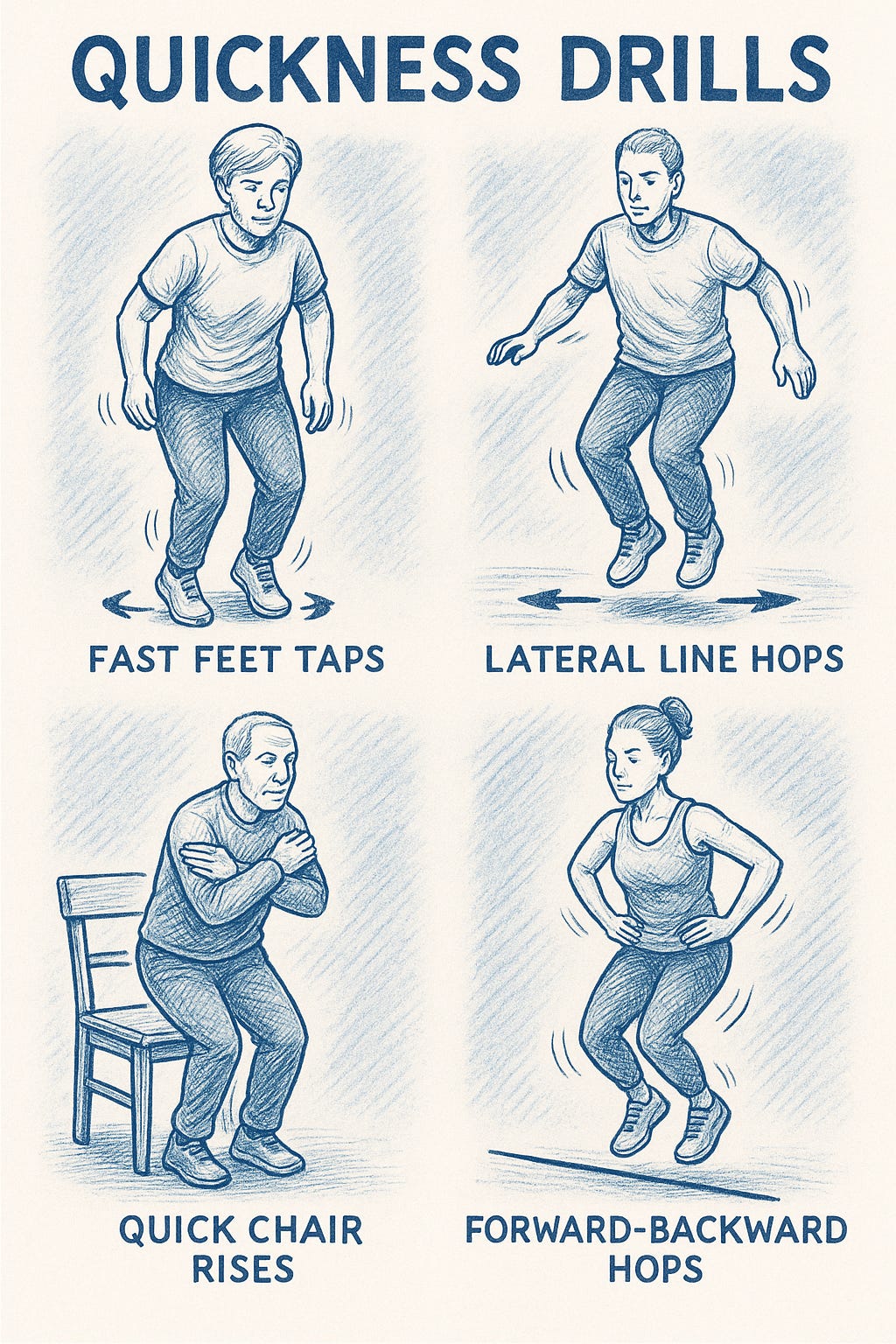
Fast Feet Taps: Stand tall, march your feet quickly in place for 10 seconds. Rest, repeat x3.
Line Steps: Draw or imagine a line on the floor. Step side-to-side quickly over it for 10 seconds. Rest, repeat x3. Keep your feet wide enough so you don’t crowd them. Also… keep your weight centered. Don’t lean towards the stationary foot.
Rapid Calf Raises: Stand near a wall or counter for support. Rise up on your toes quickly, lower under control. 12–15 reps x2.
Tier 2 (Progressors)
Lateral Line Hops: Hop side-to-side over a line, 10–15 seconds. Rest, repeat x3.
Quick Chair Rises: Stand up from a chair as fast as you can (arms crossed), then sit slowly. 6–8 reps x2.
Fast-Feet Shuffle: In a short space, take 4–6 quick steps forward and back, or side to side. Do 3 rounds.
Bonus Drill
Forward–Backward Line Hops: Hop both feet over a line forward and back for 10 seconds. Rest, repeat x3.
Why It Matters
Strength helps you rise from a chair. Quickness helps you do it before you fall. Training the nervous system to fire faster improves balance, reaction time, and overall resilience. Even a few seconds of “fast” sprinkled into your week can sharpen your body’s ability to respond.
Your Move: Try one Tier. Stick with it twice this week. If it feels good, add a drill from the other Tier. Notice how your body responds — not just during the drill, but the next time you need to move a little faster in daily life.
Disclaimer:
This Action Plan is for informational and educational purposes only. It is not intended as a substitute for professional medical advice, diagnosis, or treatment. Always consult your physician or other qualified healthcare provider before beginning any new exercise program, especially if you have any underlying medical conditions, injuries, or concerns. Participation is voluntary and at your own risk. Injuries, as always, can occur. If you don't feel like you can accomplish these tasks easily, then consider seeking assistance from a professional therapist or coach.
Exercise is the risk you take to avoid the complications of being still
Dr Luks, you and others recommend hops and jumps, but I’ve had a knee replacement and have been told that jumping movements could jeopardize the new joint. Do you have alternative moves you could recommend for people like me, particularly that might help with bone density? Thanks
Love these also appreciate the videos. Keep them coming