
Be consistent. Exercise like you want to be out there again tomorrow.
Don't let today's activities ruin tomorrow's.

Going too hard too often might make you feel like you’re accomplishing something. But it also might come with a heavy cost. Especially for most of us who are not perfectly trained endurance athletes. Load management is the key to avoiding overuse or stress injuries.
I am a fan of keeping things simple. For example. I am not a fan of sleep trackers. I have far too many friends who don’t sleep well, worrying about their tracker score the next morning. Same with CGMs. People are avoiding blueberries because of “spikes”!
From an exercise perspective, I try to keep it simple as well. I do a few longish days on a bike, a few decent runs of 4-6 miles, and one longer (90+ minute) run or ride per week. Couple that with 2-3 resistance training sessions, and it’s a full week. This has a purpose. Low heart rate work is important. So is higher heart rate work. Remember… most runners or cyclists go too hard on their easy days and too easy on their hard days. Combatting muscle and power loss as we age is incredibly important. One resistance training day will allow you to maintain most of your muscle mass. 2-3 sessions will help you build more muscle mass.
But each exercise comes with a cost. Couple that with the fact that most humans are awful at risk assessment, and here’s where most people get into trouble. Most injuries in my office in active people occur due to a training error. Pushing too hard too often isn’t the right way to go.
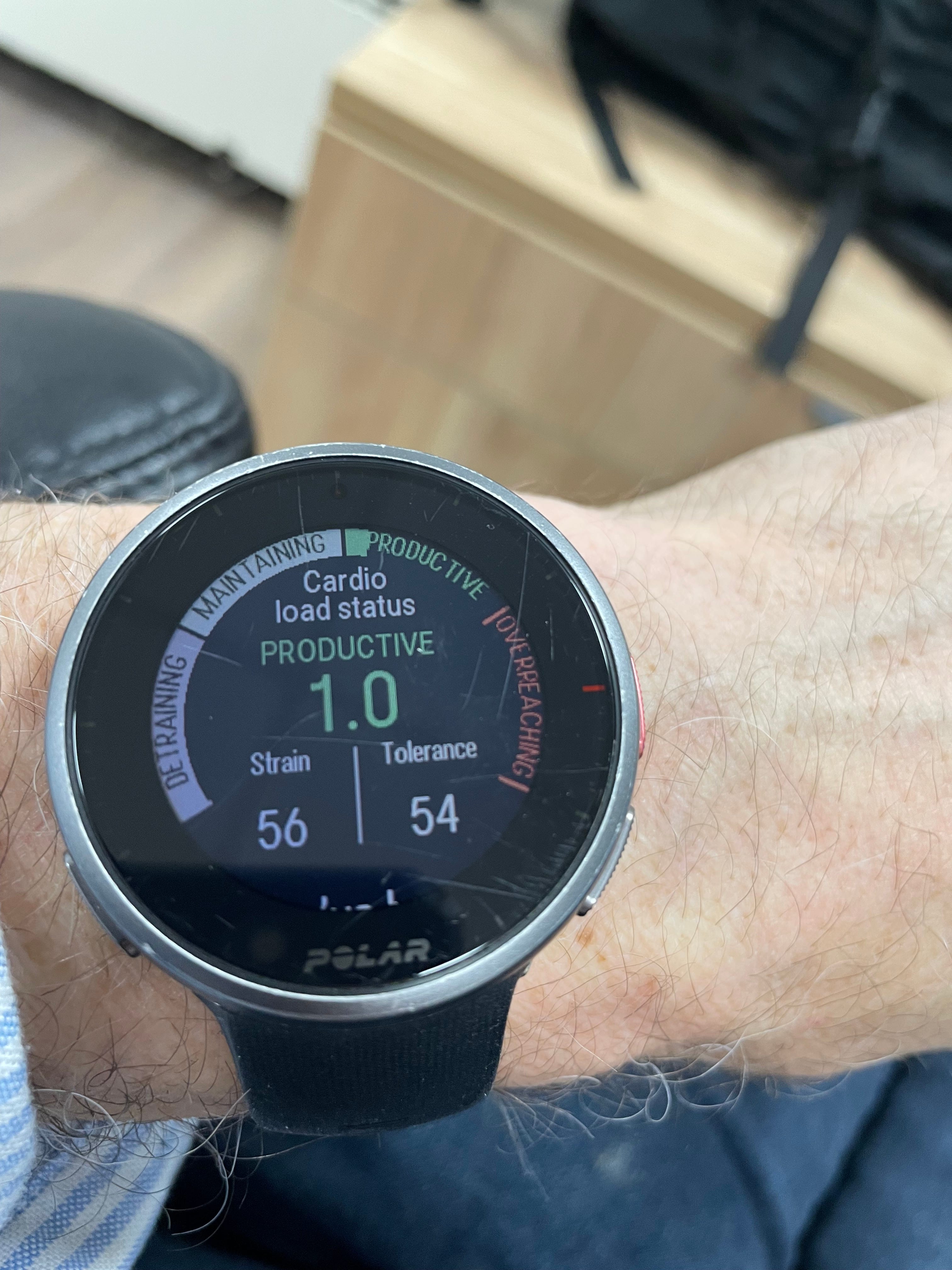
The picture above shows strain and tolerance. Or acute load versus chronic load. Other watches or platforms may show this as an acute training load (ATL) vs chronic training load (CTL).
The screenshots below are from the HRV4Training app. They are incredibly useful and have predicted nearly every stress fracture or injury that I have had. Early on, I was too pigheaded to pay attention to the app. That’s no longer the case.
This screenshot shows the chart of ATL vs CTL.
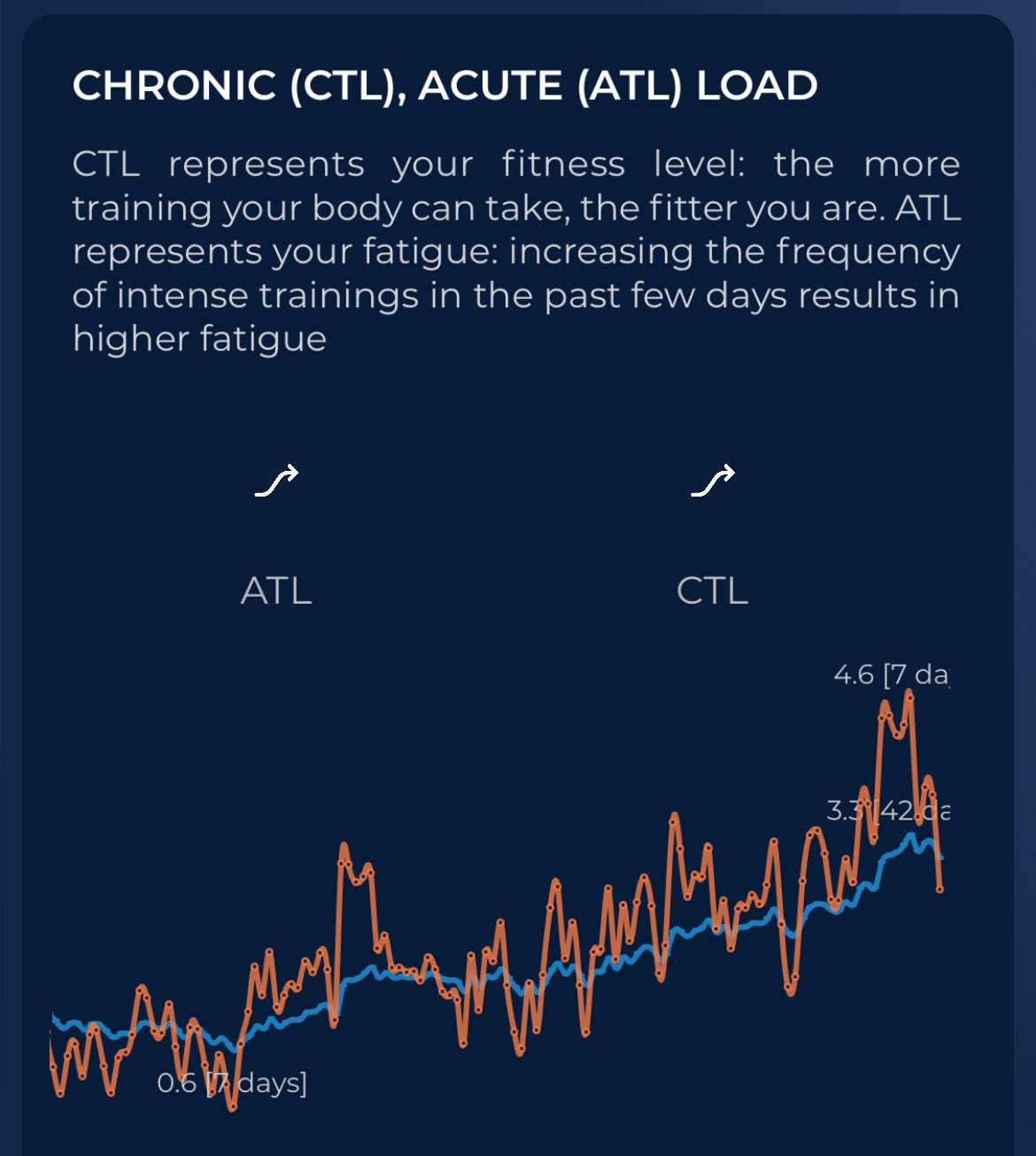
The slope of change matters. But the developer, Dr. Marco Altini did not leave it up to us to determine that. The next screenshot shows how this data can be used to determine your injury risk and readiness.
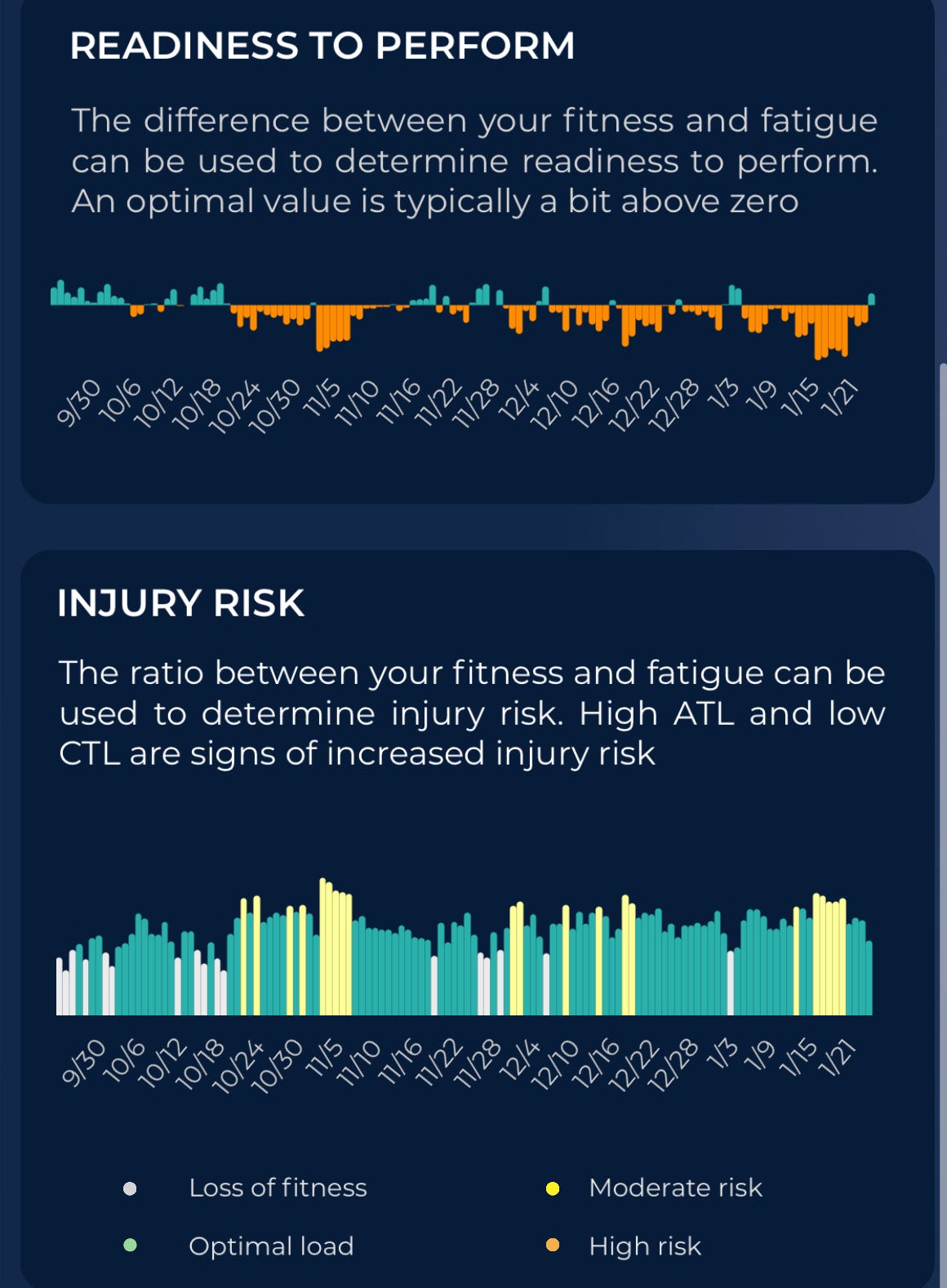
The most important thing that we need to consider when training is the fact that we want to be able to train tomorrow, too. In other words, don’t let today ruin your tomorrow.
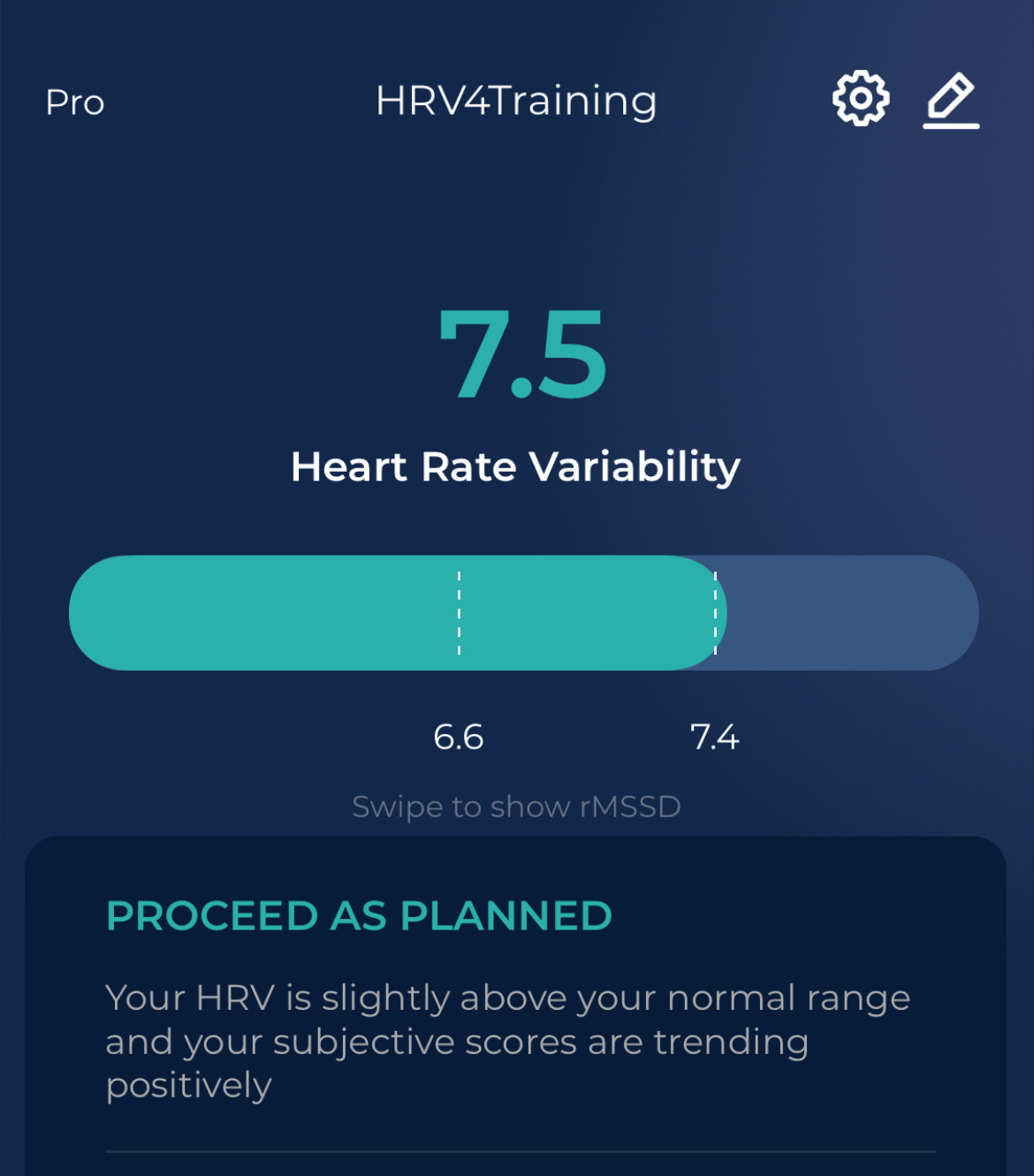
Load management is important. Especially if you want to minimize the risk of an overuse injury that might sideline you for a few months. The HRV4Training app is super simple. You wake up, pee, then sit on your bed for a minute. You open the app, put your finger on the camera's lens, and start the reading. Yes, it reads your HRV from the camera lens. The app is connected to Strava or your watch, pulling the previous day's data regarding your exercise. Now, it knows your load, HRV, and resting heart rate (RHR). Comparing your HRV and RHR to your baseline and calculating the effect of your previous day’s training, the app can determine how well you manage the stress of the training load and whether or not you are good to go the next day. The app will then signal you whether you are in the green (go!), yellow (go slow), or red (go back to sleep).
Yes, I like simple. No, I do not track everything. But load management and avoiding injuries is very important to me. This techniue is simple. Detraining due to injury is awful, and bouncing back from an injury is never a linear, straightforward, rapid process. The best ‘treatment’ for overuse injuries is avoidance.